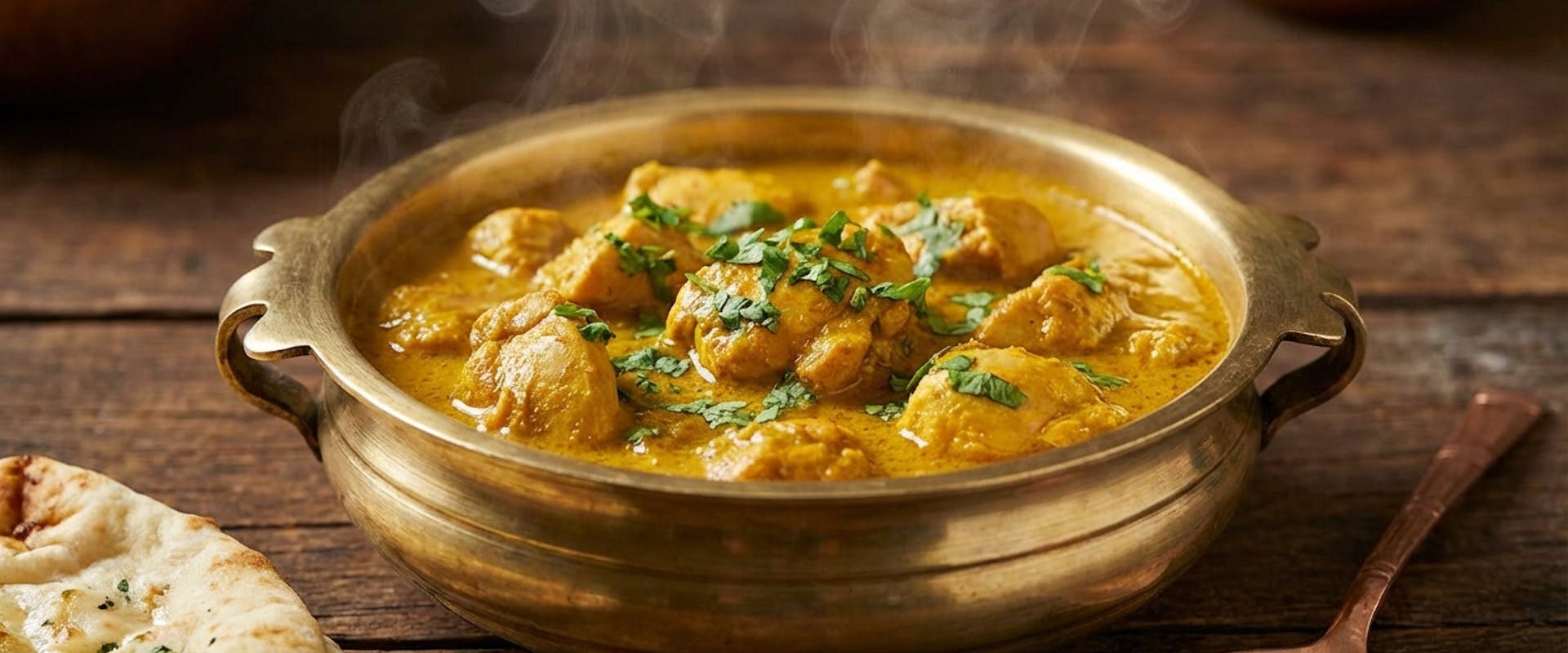
Yellow Curry and Chicken: India's Golden Bowl of Comfort and Spice
The golden hue catches the light as steam rises from the bowl—turmeric, cumin, and coriander mingling in an aromatic dance that has drawn travelers to India's kitchens for centuries. This is yellow curry, and when paired with tender chicken, it becomes one of the most comforting dishes in the entire subcontinent.
The Soul of Yellow Curry
Unlike its Thai cousin, Indian yellow curry—often called korma or simply peela murgh in Hindi—draws its character from a complex blend of ground spices rather than curry paste. The golden color comes primarily from turmeric, that ancient root prized for both its vibrant pigment and medicinal properties.
In a small restaurant tucked behind Mumbai's Crawford Market, I watched a cook prepare yellow curry the way her grandmother taught her. No measuring spoons, no recipes—just decades of muscle memory guiding her hands through the spice box.
"The curry speaks to you," she explained, adding a pinch of garam masala by feel. "You learn to listen."
The Essential Spice Foundation
Authentic Indian yellow curry builds flavor in layers. Understanding these spices is understanding Indian cuisine itself.
The Core Spices
Turmeric (Haldi) - The star of the show, providing that signature golden color and earthy, slightly bitter undertone. Fresh turmeric root is ideal, but high-quality ground turmeric works beautifully.
Cumin (Jeera) - Adds warmth and a nutty, peppery depth. Often used both whole (for tempering) and ground.
Coriander (Dhania) - The seeds bring citrusy, floral notes that brighten the dish. Always toast before grinding for maximum flavor.
Garam Masala - The finishing spice blend, typically containing cardamom, cinnamon, cloves, and black pepper. Added at the end to preserve its aromatic punch.
Supporting Players
Ginger and Garlic - The aromatic base of nearly every Indian curry. Fresh is non-negotiable.
Green Chilies - For heat that builds slowly rather than attacks immediately.
Kashmiri Red Chili Powder - Adds color and mild heat without overwhelming bitterness.
The Art of Building Flavor
Indian cooking is all about layering—each step building upon the last to create complexity that single-pot cooking cannot achieve.
Step 1: The Tempering (Tadka)
Heat ghee or oil until shimmering. Add whole cumin seeds and watch them sizzle and pop. This releases their essential oils and creates the aromatic foundation.
Step 2: The Aromatics
Sliced onions cook slowly until deeply golden—this caramelization is crucial. Never rush this step; the sweetness of properly cooked onions defines the curry's character. Add ginger-garlic paste and cook until the raw smell disappears.
Step 3: The Spice Bloom
Ground spices hit the pan and toast briefly in the fat. This "blooming" activates flavors that would otherwise remain dormant. The kitchen fills with fragrance—you'll know the spices are ready.
Step 4: The Simmer
Tomatoes break down and meld with the spices. Yogurt or coconut milk adds creaminess. The chicken braises gently, absorbing everything the curry has to offer.
Authentic Yellow Chicken Curry Recipe
This recipe serves 4 generously and rewards patience.
Ingredients
For the curry:
- 800g bone-in chicken pieces (thighs and drumsticks work best)
- 3 medium onions, thinly sliced
- 4 cloves garlic, minced
- 2-inch piece fresh ginger, minced
- 2 medium tomatoes, pureed
- 200ml coconut milk or yogurt
- 3 tablespoons ghee or vegetable oil
- Fresh cilantro for garnish
For the spice blend:
- 1½ teaspoons turmeric powder
- 2 teaspoons ground coriander
- 1 teaspoon ground cumin
- ½ teaspoon Kashmiri red chili powder
- 1 teaspoon garam masala
- 1 teaspoon salt (adjust to taste)
For tempering:
- 1 teaspoon cumin seeds
- 2 green cardamom pods
- 1 small cinnamon stick
- 2 dried bay leaves
The Method
Marinate the chicken: Rub chicken pieces with half the turmeric, a pinch of salt, and a squeeze of lemon juice. Rest for 30 minutes at room temperature.
Build the base: Heat ghee in a heavy-bottomed pan over medium heat. Add cumin seeds, cardamom, cinnamon, and bay leaves. When the cumin sizzles and becomes fragrant (about 30 seconds), add the sliced onions.
Cook onions for 15-20 minutes, stirring occasionally, until deeply golden brown. This patience is rewarded with sweetness and depth.
Add aromatics: Stir in ginger and garlic, cooking for 2 minutes until fragrant. Add the remaining ground spices (turmeric, coriander, cumin, chili powder) and stir constantly for 1 minute.
Incorporate tomatoes: Pour in the tomato puree and cook for 8-10 minutes until the oil begins to separate from the masala—this indicates the raw tomato taste has cooked out.
Braise the chicken: Add the marinated chicken pieces, turning to coat in the masala. Pour in coconut milk and enough water to nearly cover the chicken. Bring to a simmer.
Slow cook: Cover and cook on low heat for 35-40 minutes until chicken is tender and falling off the bone. The sauce should be thick enough to coat the back of a spoon.
Finish: Sprinkle garam masala over the curry and stir gently. Taste and adjust salt. Garnish with fresh cilantro.
Regional Variations Across India
North Indian Style
Richer and creamier, often using cashew paste and heavy cream. The Mughal influence shows in aromatic spices like saffron and rose water.
South Indian Style
Coconut milk dominates, with curry leaves and mustard seeds in the tempering. Tangier, often with tamarind, and more liberal use of fresh chilies.
Bengali Style
Mustard oil replaces ghee, adding a pungent kick. Panch phoron (five-spice blend) creates a distinct flavor profile.
What to Serve with Yellow Curry
The curry demands proper accompaniments:
Basmati Rice - Long-grain, aromatic, and fluffy. The curry sauce pools beautifully around each grain.
Naan or Roti - For scooping and soaking up every last drop of sauce. Fresh from a hot pan or tandoor.
Raita - Cooling cucumber-yogurt sauce that balances the spice.
Pickles (Achar) - Sharp, spicy, and fermented—they cut through the richness.
Finding the Best Yellow Curry
In India
Mumbai's Khyber - Their murgh korma is legendary, with a sauce so silky it seems impossible.
Delhi's Karim's - Operating since 1913, their chicken curry recipe hasn't changed in over a century.
Kolkata's Peter Cat - Their interpretation brings Bengali subtlety to the classic.
Cooking at Home
The beauty of yellow curry is its accessibility. Start with quality spices—buy whole and grind fresh when possible. Master the onion caramelization. Learn to trust your senses over timers.
My first homemade yellow curry was a disaster—bitter from burnt spices, watery from impatience. By the twentieth attempt, I could cook it blindfolded. That's the journey this dish offers.
The Comfort of Golden Bowls
There's a reason yellow curry appears on tables across India during celebrations and quiet family dinners alike. It's substantial without being heavy, complex without being fussy, and deeply satisfying in a way that transcends cultural boundaries.
On a rainy evening in Jaipur, I ate yellow curry from a street vendor's cart—plastic stool, tin plate, the smell of wet earth mixing with spices. The chicken was falling apart, the sauce was perfect, and for those twenty minutes, nothing else mattered.
That's what great curry does. It demands your attention, rewards your patience, and reminds you why people have been cooking these same spices in these same combinations for thousands of years.
Some recipes don't need improvement. They just need someone willing to learn them properly.
Find your heavy-bottomed pan. Stock your spice box. Start with the cumin seeds hitting hot ghee, and let the curry teach you the rest.